Beyond its beaches, Martinique has a rich and moving heritage: former sugar plantations, Creole architecture, remains of the 1902 eruption, fine crafts and the memory of slavery. Discovering it is the best way to understand the soul of the island and its people.
From our rentals in Sainte-Luce, most of these sites are an easy day trip, perfect for alternating with beach days.
DID YOU KNOW?
On 8 May 1902, the eruption of Mount Pelée wiped out Saint-Pierre, then nicknamed the “Little Paris”. Its ruins can still be visited today.
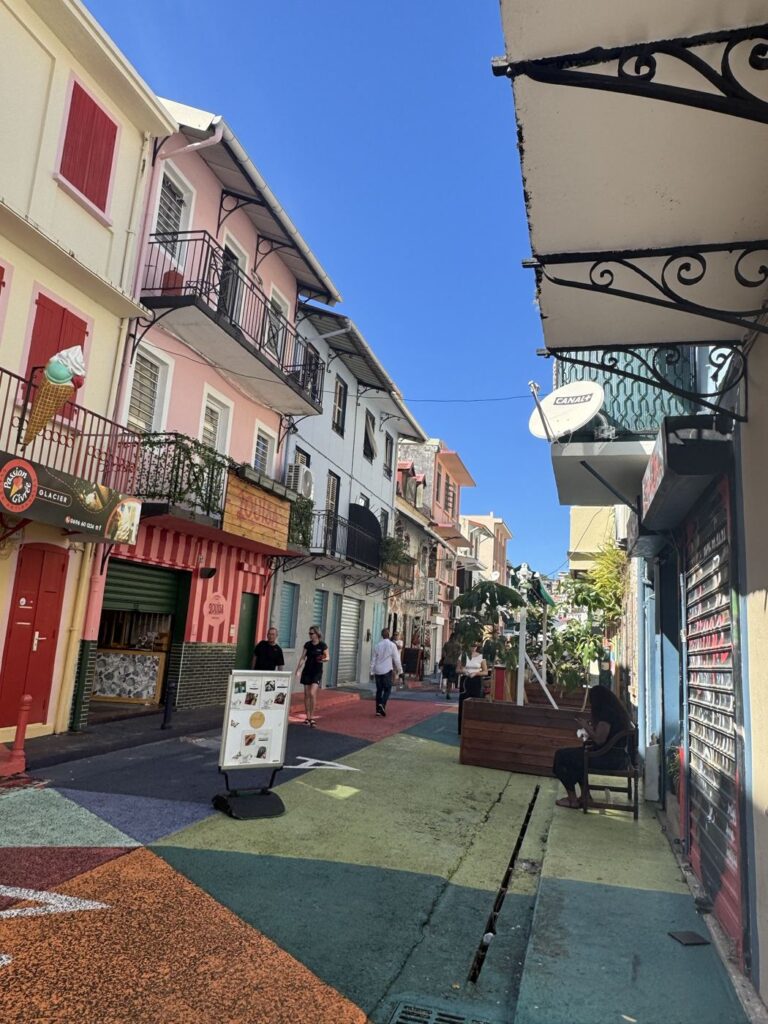
A street in central Fort-de-France
Plantations and Places of Memory
DOMAINE DE LA PAGERIE (TROIS-ÎLETS)
The birthplace, in 1763, of Joséphine, future Empress of the French. The museum, set in the former kitchens, displays objects from her life and letters from Napoleon. An exhibition is devoted to the people enslaved on the estate. Allow about 2 hours.
HABITATION SAINT-ÉTIENNE (GROS-MORNE)
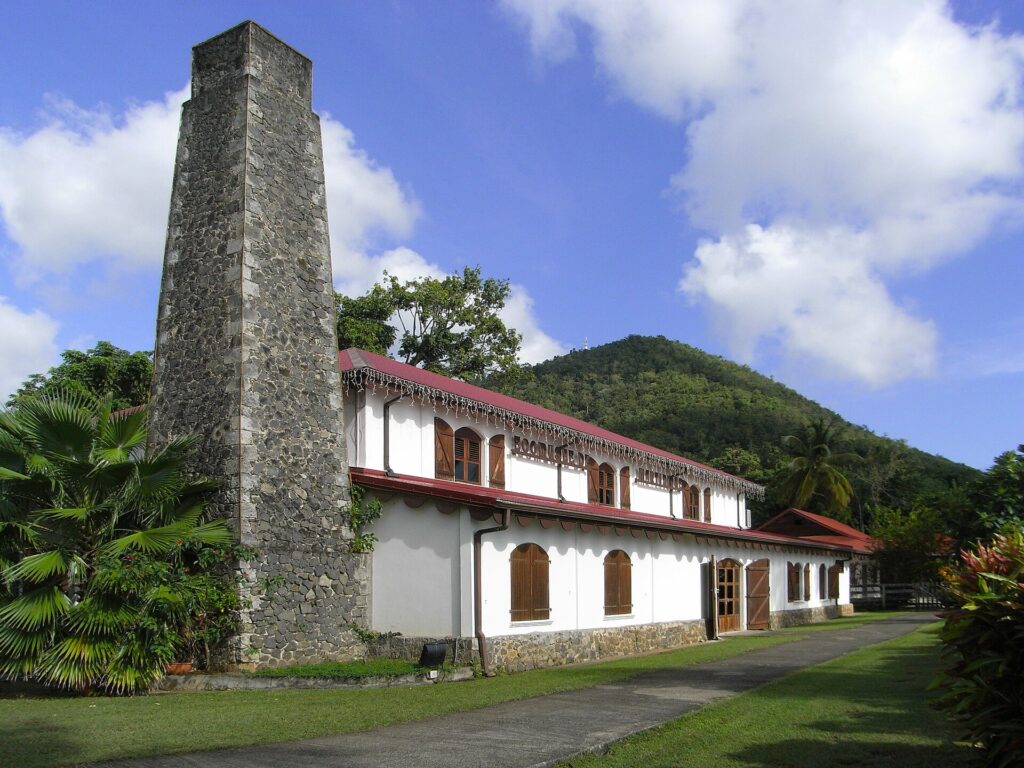
A former sugar plantation turned distillery at the end of the 19th century, surrounded by a garden awarded the “Remarkable Garden” label, with more than 180 plant species, waterfalls and pools. Free visits every day and rum tasting.
CHÂTEAU DUBUC (LA TRINITÉ)
On the Caravelle peninsula, the ruins of this former plantation overlook the Atlantic Ocean. A paid visit, ideal to combine with the Caravelle hike and its mangrove.
Must-See Sites
A HISTORY TO UNDERSTAND
Martinique’s heritage is inseparable from the history of sugar cane and slavery, abolished in 1848. Plantations, museums and places of memory tell this story with sensitivity. Take time to read the panels and talk with the guides: it is often the most moving part of the visit.
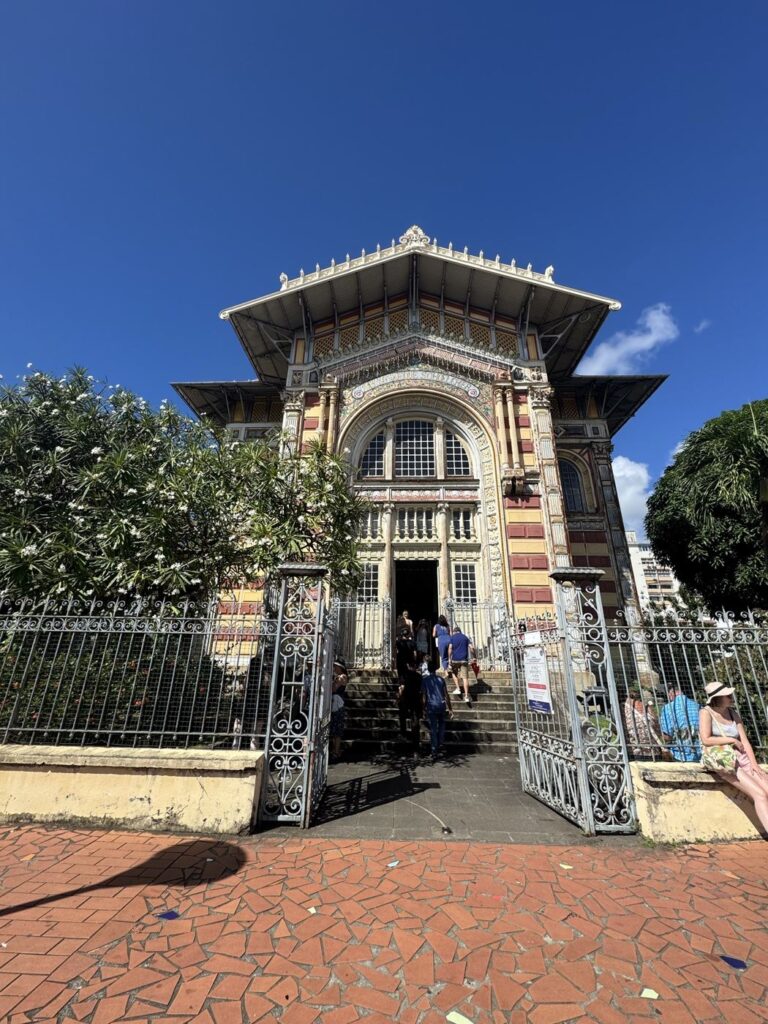
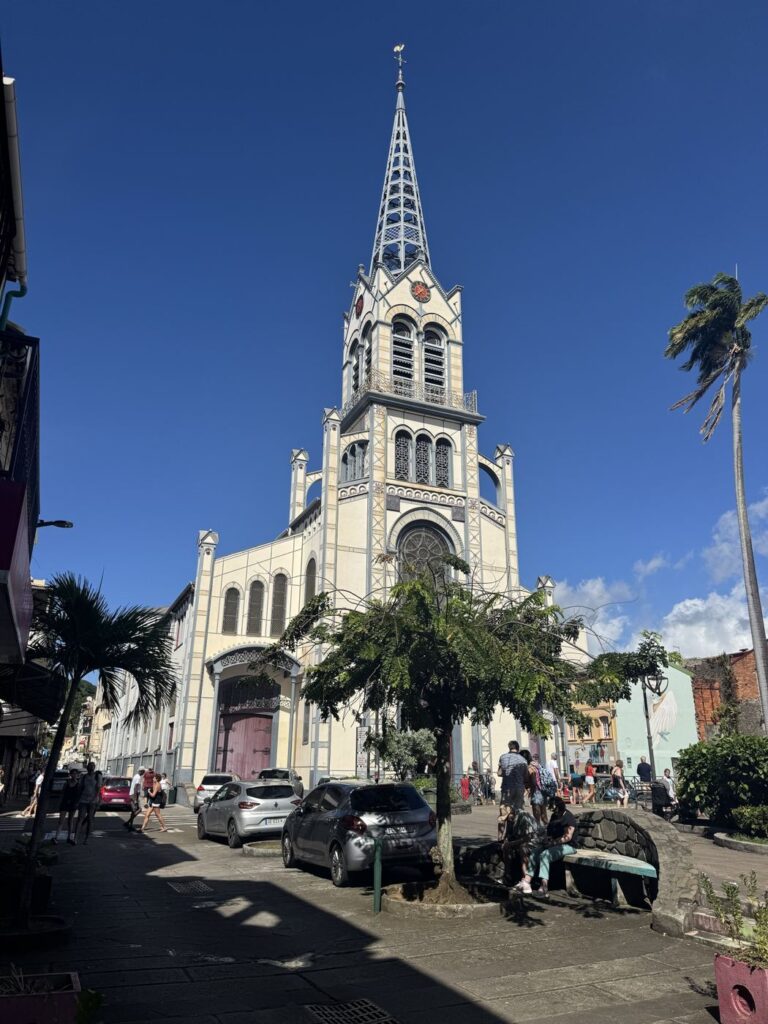
Martinique’s capital is best explored on foot: colourful lanes, the covered market, La Savane park… Don’t miss the Schœlcher Library, a masterpiece of metal architecture shown in Paris at the 1889 World’s Fair and then rebuilt in Fort-de-France, or the Saint-Louis Cathedral and its slender spire.
Don’t miss: the Schœlcher Library, the cathedral and the colourful lanes
Tip: come in the morning, as shops often close early
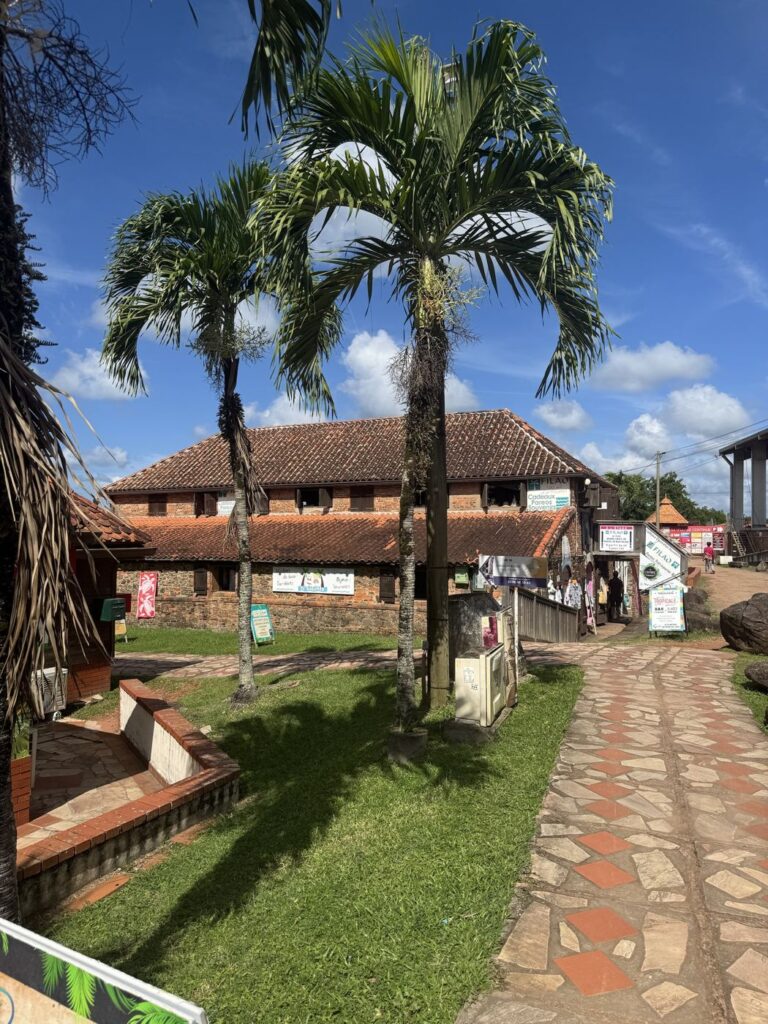
VILLAGE DE LA POTERIE (TROIS-ÎLETS)
Set on the site of a pottery in operation since 1783, one of Martinique’s oldest businesses, this village gathers artisans, potters, designers, shops and restaurants in its brick buildings. A pleasant stroll to find locally made souvenirs.
Opening hours: Monday to Saturday 9am–6pm, Sunday 9am–1pm
Admission: free
Village de la Poterie, Les Trois-Îlets
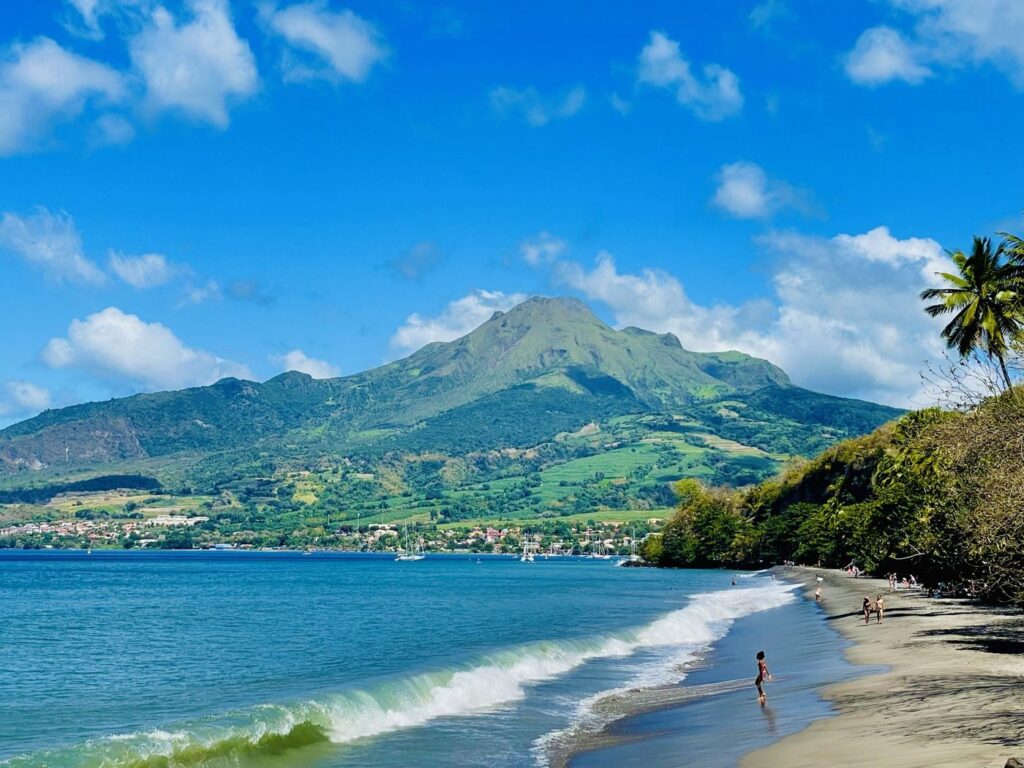
Mount Pelée from the Caribbean coast
SAINT-PIERRE AND MOUNT PELÉE
Once the island’s economic capital, Saint-Pierre was destroyed within minutes by the 1902 eruption. Today you can walk among the ruins of the theatre, modelled on the one in Bordeaux, the prison and the Fort church. The Memorial to the 1902 Disaster (Franck Perret Museum) tells the story of that tragic day.
Memorial: open daily 9am–6pm
Tip: combine it with a day in the north
Fancy climbing Mount Pelée? Find our tips on our Hiking page.
Martinique’s History in a Few Dates
KEY MILESTONES
Before 1500: the island, called Madinina or Jouanacaëra, is inhabited by Amerindians (Arawaks, then Kalinagos).
1502: Christopher Columbus lands during his fourth voyage.
1635: French colonisation begins with the founding of Saint-Pierre.
17th–19th centuries: the sugar cane economy relies on the enslavement of hundreds of thousands of deported Africans.
22 May 1848: slavery is abolished in Martinique, following an uprising of the enslaved. 22 May is now a public holiday.
8 May 1902: the eruption of Mount Pelée destroys Saint-Pierre.
1946: Martinique becomes a French department, driven notably by the poet and politician Aimé Césaire.
Places of Memory Near Our Rentals
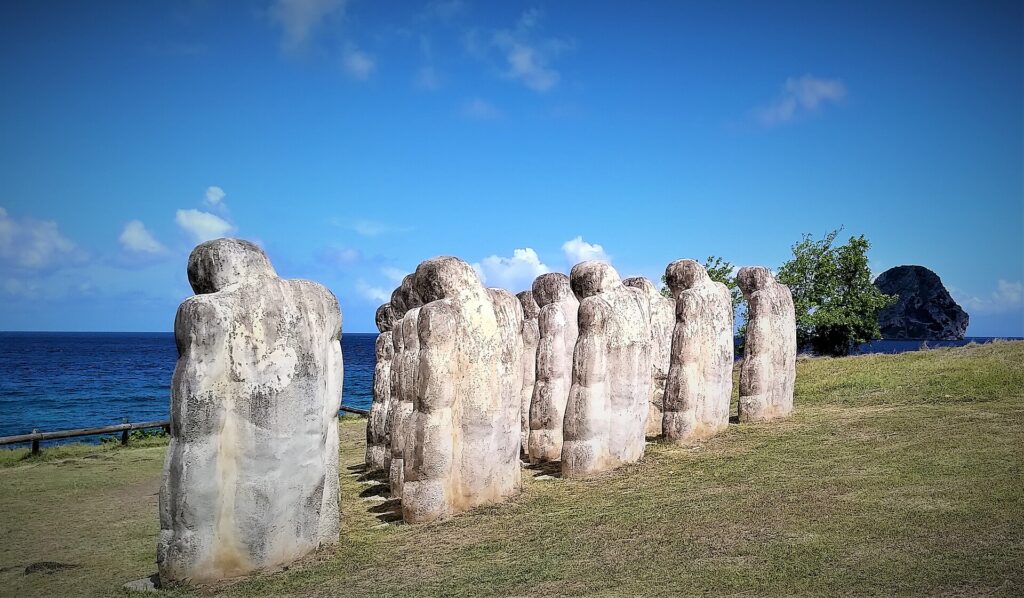
Cap 110 Memorial, Anse Caffard (Le Diamant)
CAP 110 MEMORIAL, ANSE CAFFARD (LE DIAMANT)
On a cliff facing Diamond Rock, fifteen large white statues turned towards the sea honour the victims of a slave ship wreck in 1830, and all victims of the slave trade. Created in 1998 by Martinican sculptor Laurent Valère for the 150th anniversary of abolition, it is one of the most moving places on the island.
Driving time: about 20 minutes
Access: free
Combine it with a swim: find our favourite southern beaches on our Beaches page.
Right next to Sainte-Luce, by the lovely Anse Figuier beach, the ecomuseum traces the island’s history from the first Amerindians to the banana economy, including the plantations and slavery. A visit of about an hour, to combine with a swim.
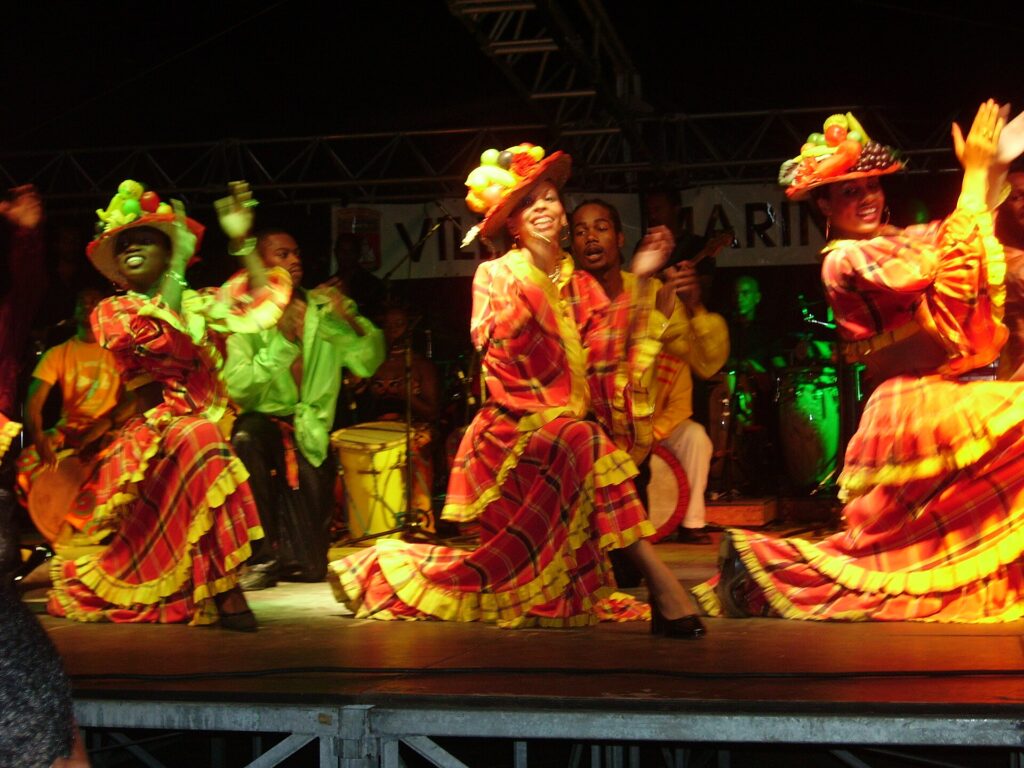
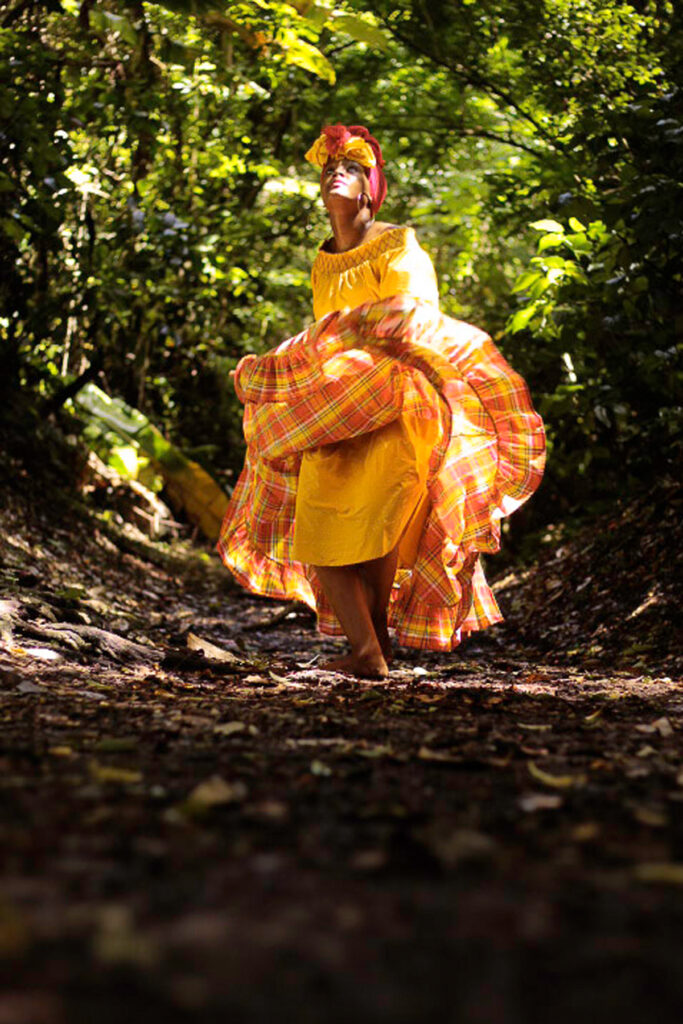
Originally from India, from the Madras region (now Chennai), this brightly coloured checked fabric reached the Caribbean through maritime trade and became the emblem of the Creole costume: grand’robe, douillette, scarf and gold jewellery.
According to tradition, the number of points tied on top of the madras headdress sent a message: one point for “heart available”, two for “heart taken”, three for “married”, four for “there’s room for anyone who wants to try their luck”!
Where to buy it: at the covered market in Fort-de-France and at the stalls of the Sainte-Anne market.
DANCE AND MUSIC
Bèlè is the island’s oldest traditional dance, inherited from enslaved Africans. It is danced in a circle to the bèlè drum and the ti-bwa, and bèlè evenings open to all are held regularly in the villages.
Biguine and Creole mazurka were born in Saint-Pierre in the late 19th century. Quadrille, or haute-taille, is a couples’ dance inherited from European balls. And zouk, born in the 1980s with the band Kassav’, brought Caribbean music to the whole world.
Bèlè dancer
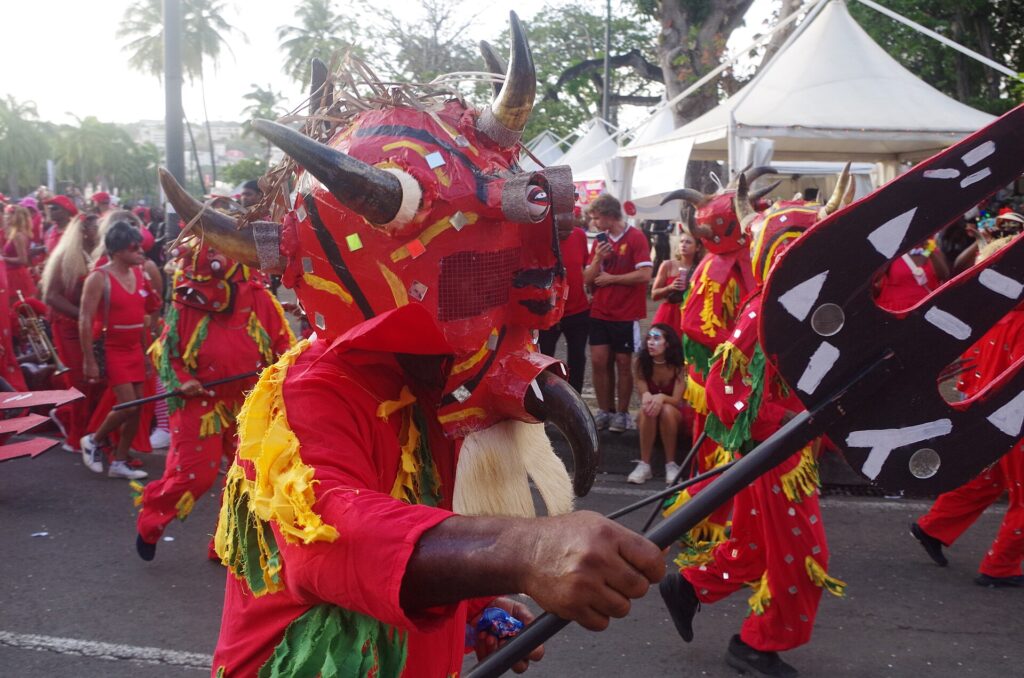
Red devil at the carnival
CARNIVAL
Parades start in January on Sundays and peak with the four “fat days”: Fat Sunday and its big parades, Fat Monday and its “burlesque weddings”, Mardi Gras when everyone wears red with the red devils, and Ash Wednesday in black and white, when Vaval, the carnival king, is burned.
Good to know: in 2027, the fat days take place from 7 to 10 February. A perfect time for a stay!
Weaving, or basketry: a craft inherited from the Amerindians. Using plant fibres such as aroman, artisans weave baskets, trays and fish traps. Morne-des-Esses, in Sainte-Marie, is the basketry village.
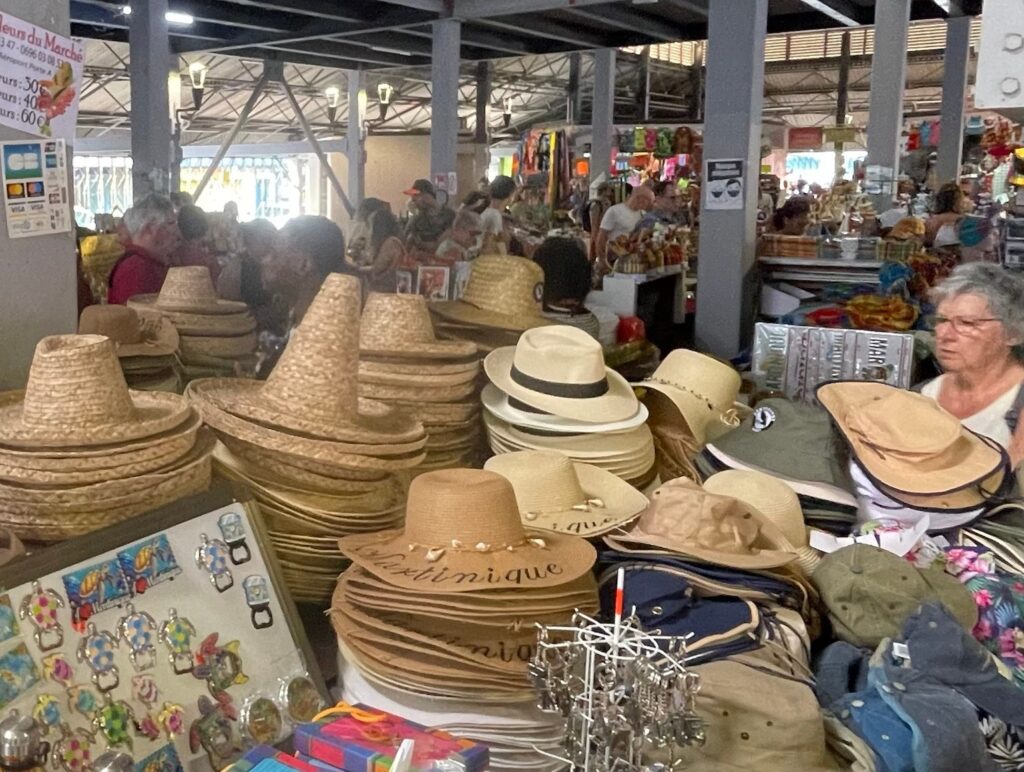
The bakoua: Martinique’s traditional hat, conical and woven from bakoua leaves, a type of pandanus. It protected field workers from the sun. Today it is a symbol of the island, and a lovely souvenir to take home.
Woven straw hats at the Grand Marché in Fort-de-France
Tips for Your Visits
Check opening hours: many sites close on Sunday afternoons
Visit Fort-de-France in the morning
Bring cash for admissions and markets
Dress respectfully to visit churches
Be respectful at places of memory
Group your visits by area: south, centre or north
Want to Discover Martinique’s History?
From our rentals in Sainte-Luce and Sainte-Anne, the cultural sites of the south and centre are easy to reach, and the north is a great day trip. In the evening, relax by your pool.
Discover our villa and lodge with private pool in Sainte-Luce, and our Maisonnette with hot tub in Sainte-Anne.